Thanks both for your replies, yeah I’m going to be incorporating chord changes into my tappings (probably start on the 2nd or 3rd taps for now).
2 Likes
Hello @rikky_boy and welcome to the Community.
One strum per bar:
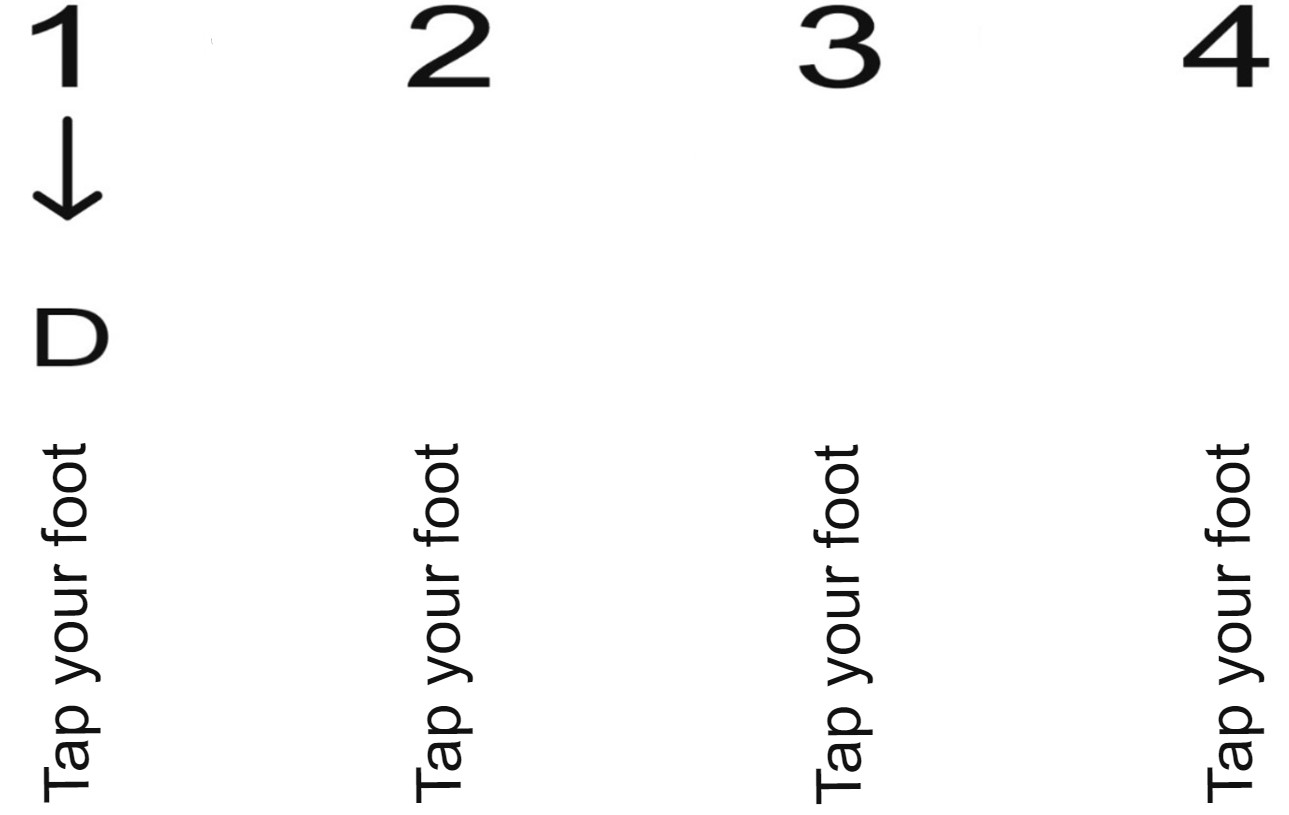
Four strums per bar:
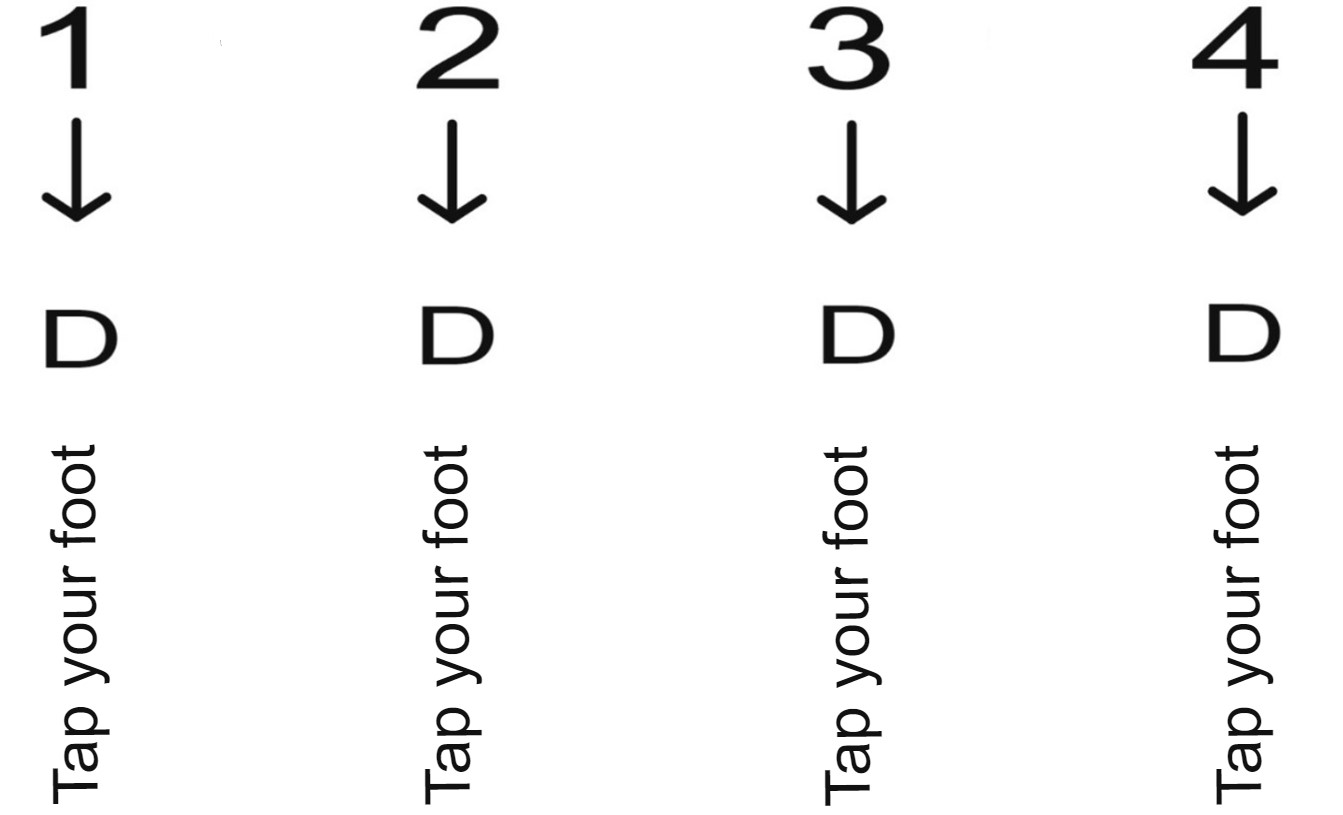
Hope that helps.
Cheers 
| Richard_close2u | Community Moderator, Official Guide, JustinGuitar Approved Teacher
2 Likes
Perfect thanks mate 
1 Like
@Richard_close2u I don’t fully understand the concept of downbeats, upbeats, etc. Does Justin have other videos where I can learn more about this in detail? He provides a picture of a music sheet in the “learn more” section. Where can I find more information on how to read this?
Thanks!
1 Like
You should check out all the rhythm lessons in the same module. Cheers.
3 Likes
Hi Dante - check the video lesson @jjw linked. Hopefully it is enough for you for now. Ask other questions if you still have issues.
Cheers | Richard_close2u | JustinGuitar Official Guide, Approved Teacher & Moderator
1 Like
So how important is it to doing those “fake” strums after the first strum/beat? I seem to have the foot tapping going alright, (although it gets a little crazy during the Mavericks song) but I just can’t get my hand to do the 3 soundless strums while tapping my foot and making sure my fretting fingers are in the right place. I may have missed something, but how is it going to help?
2 Likes
Hi Rebecca,
The short answer is: it’s important. You’ll be hearing that over and over! But you’re at the beginning of your journey, so don’t stress about it just now. You’ll get it! When I started, I had trouble tapping my foot properly with my strumming - I think I was nearly through grade 1 before I got the hang of it. And I still mess it up when learning a new strumming pattern. (I’m mid-Grade 2 now, so still a beginner.) It takes time for everything to come together, but it will. It happens a bit differently for each of us. Oh - if you haven’t yet, take a look at Nitsuj practicing - that’s Justin learning to play left-handed. It really helped me understand what I should expect to be able to do at various stages.
3 Likes
Thanks. I have watched 3 of Nitsuj’s practices and they were awesome, he was playing almost as badly as me! Kind of an eye opener.
4 Likes
My experience at this stage was that keeping my strumming going was more important than the foot tapping. The foot tapping just messed up my strumming and fretting - too much going on at once.
2 Likes
Merci
1 Like
Hey, I’ve been using this app/site for about a year or so when I picked a guitar up for the literal first time of my life, currently on Grade 1, kinda between modules 5 and 6 (yeah I’m slow learner I know. I spent a lot of time struggling with my strumming, which I still do to an extent, but that’s not the point here.
What I’ve been wondering lately is that in the app in the play along feature there are songs that are marked under the “on the beats” strumming patter and the diagram for it shows a down strum for every of the 4 beats. “Perfect” by Ed Sheeran comes to mind right now. So my question is, does that literally mean doing a downstream every single beat? Or only on those beats where there is a chord circle shown in the app? Cus on hand the diagram shows every beat but a lot of the songs with that pattern sound awful when I strum like that, instead of only hitting the beats that are marked with chords.
So yeah, what do I make of this?
1 Like
Great question, i am new as well so i too am waiting for the answer
Hi @999avatar999, first of all: you are free to use whichever strumming pattern sounds good to you - there’s no right or wrong. As you’re in module 5-6, you’ve already learned ‘old faithful’. You could try that one, see how it sounds?
The strumming patterns in the app are suggestions. They can be simplified compared to the original to make them feasible for beginners. When starting out, you indeed do 1 strum per bar, on the first beat (where the chord is indicated in the app). Strumming once per bar gives you more time to change between chords and to time your strum correctly. However, you have to learn a couple of things, like keeping rhythm, more complicated strumming patterns and changing more quickly between chords. That’s where four downstrums, on all four beats, come in: it forces you to keep a rhythm and to change more quickly. It’s also a step up towards more complicated strumming patters. You’re right that just doing 4 down strums won’t sound all that great for most songs, but it’s just a transition.
3 Likes
but, WHY is it important, what purpose does it serve? what do I gain later on from fake strumming, I’m struggling to understand the why or the benefit. Please explain.
Justin explains why in the video:
He also mentions later on that it’s not easy to do this for beginners, so if you are struggling with it, you are not alone!
Thanks for trying to clarify. There isn’t actually an explanation on the why within the video. He only states that it’s so that you know what you’re aspiring to, but doesn’t actually explain why fake strokes are useful. Is it just for someone who can’t do 4 strokes, or is it to support future techniques? It’s not at all clear, can you please help explain the rationale for what the fake strokes are looking to achieve?
To me, the part of the video that I linked to is the explanation, but I suppose it wasn’t very clear to you. Justin says:
“You’re trying to train an automatic response so that you’re feeling this downbeat with your foot, the down strum with your hand… we’re gonna do a down strum pretty much always on a downbeat …”
This makes sense to me: you want to form an automatic connection in your brain such that a down beat indicates a down strum. I don’t think it’s any more complicated than that.
A couple of remarks on what you wrote:
No, of course not, it’s for everybody.
“Techniques” may not be the right word. The rationale is to help instil this automatic association between the down beat and the down strum motion.
EDIT: Let me add that if you’re having trouble with this and you’re also having trouble seeing the value in mastering it, you should just skip it and move on. It’s not that big a deal. Good luck!
I have to disagree with this statement. The whole lesson is on timing/rhythm, getting a player use to the beat and the relationship strumming. Skipping it isn’t going to make it go away and isn’t going to make strumming in time any easier.
it is important to understand how you strumming hand works with the beat.
The purpose is to teach to keep the beat even it the strumming isn’t on every beat. It sets the foundation for learning strumming patterns.
1 Like
Thanks both. That makes sense. I can see that this is not something that relates to some future technique etc. but is essentially trying to help people new to music learn a sense of rhythm etc. In which case I understand the purpose of this exercise a lot better now and how much focus to put on this.
Thanks!
2 Likes