Learn to play Norwegian Wood (This Bird Has Flown) by The Beatles on JustinGuitar!
View the full lesson at Norwegian Wood (This Bird Has Flown) by The Beatles | JustinGuitar
Learn to play Norwegian Wood (This Bird Has Flown) by The Beatles on JustinGuitar!
View the full lesson at Norwegian Wood (This Bird Has Flown) by The Beatles | JustinGuitar
what BPM should the metronome be set to at ‘full speed’
I have struggled with this as well. I use Justin’s metronome app and I do find it confusing to set the bpm in 6/8 or other times.
I think, and this is just my thinking, that if you set the metronome to 6/8 and the bpm to 2/3 of your goal you will be about there. I figured this out some time ago when “Norwegian Wood” was actually on the song app.
My recollection, and I could be wrong, was the song was about 96 bpm, and setting the metronome app to 64 was about right.
I need help with the D/F# at 5:55. I can’t do it any way. If I leave the fourth finger on the D, I can’t get my thumb over to hit low E and I can’t reach up to do it with my first finger and keep my other fingers on B and high E. The best I can manage is first on low E, fourth on D, and second or third on B, but it sounds unbelievably crappy.
@MediumFrame Have you done the grade 3 D chord explorer lesson? Some tips in there.
You don’t need to fret the low E string with your thumb. The F# of D/F# in this case is the note you’re fretting with your pinky, i.e. the 4th fret of the D string. Watch how Justin plays it from 6:12 – no thumb involved.
Btw, that reach with the pinky (even without the thumb) is tricky and takes a lot of practice to master.
I agree, it is tough! I have been on this for quite a while and still can’t hold my first finger down on the 3rd string while also hold ing the 4 th finger on the 4th string and not muting the 3rd with it.
In the meantime, I just lift the first finger, but hope to someday improve the reach.
I am, however, noticeably closer to achieving this!
I saw he brought his thumb over and got caught up in agonizing over it instead of just watching the video for 20 more seconds -_- now I’m embarrassed
It’s still a stretch and I can’t really keep my second finger on e through that part, but at least I can continue. Thanks everyone.
Gosh, no need for that! Easy mistake to make, especially since D/F# really is usually played with the thumb on the 6th string.
BTW, here’s a lesson dedicated to just this chord:
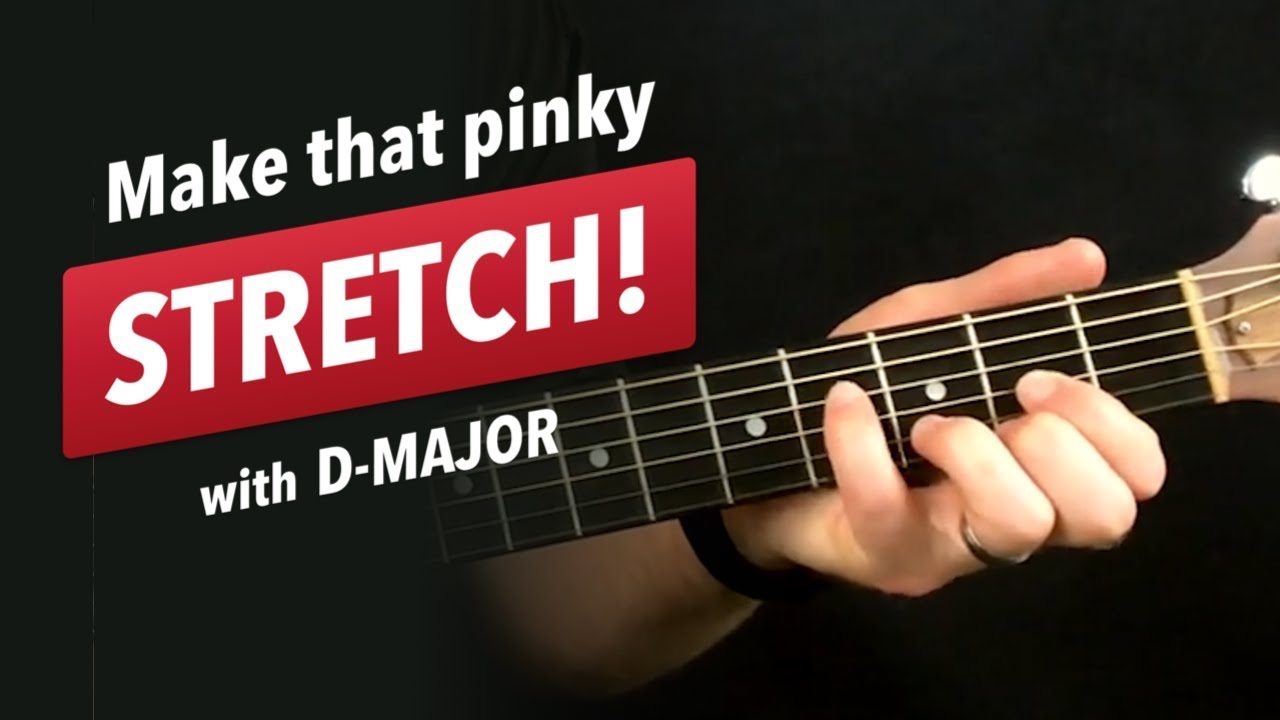
(hoping the Justin team will not object to this very specific, niche lesson from a fellow guitar teacher!)
I think linking to an alternate guitar teacher is not kosher, just stick with the D chord explorer lesson I mentioned.
@jkahn , It’s ok to link, as long as it does not duplicate one of Justin’s lessons (for example, another teacher’s video on how to play Wish You We’re Here)
I asked for guidance on the linking policy here, and the mods responded:
That does help, thank you! The alternate fingering in #7 is the one I’m trying to make work
at the very beginning: why is the g-string in the sixth fret played with a hammer on and not directly with a normal pick? Has the hammer on any advantages? The normal pick is definitely easier for me? 
Same challenge with the pinky muting the 3rd string.
Nice video. The advice about hand position seems to be helpful. I’ll try it for a few days with his pratice riff.
Just wondering if it is ok (in theory) to play with drop-D tuning (DADGBE)? It sounds good to me  . thanks
Welcome to the forum David
Yes you can play almost any song that is in the Key of D in drop D. Norwegian Wood being capo 2 is in the Key of E but uses the Chord shapes of the Key D.
I’ve been working on Norwegian Wood this week and am having a consistent issue with my fretting hand. When I play the D/F# chord, the fingernail of my ring finger (playing the D) is making contact with the G string and muting it.
Any suggestions for ways to work on improving this? I have to focus very intently on fretting that D with the verrrry tip of my ring finger, almost right behind my fingernail, but it’s hard to do in context of playing the whole song and a bit uncomfortable (though that might just be because I am not used to playing with that specific part of my finger).
I’ve tried focusing very closely on it by practicing with the fast chord change exercise between the sus chord and that one, as well as just playing with different D variations from the D chord explorer lesson. I think it is helping but I am looking for any other suggestions for exercises or practice techniques I can use to help.
It would probably be helpful if you could post a short video or pictures of you playing a regular D chord and the D/F# (the xx4232 grip). Presumably you don’t have this problem on the regular D, so you need to see what changes when you add the pinky on string 4, fret 4.
(fwiw, when I add the F#, my ring finger gets even more vertical on the fretboard and my nail actually moves slightly away from the G string. My problem is that my pinky tends to mute the G string.)
You probably have done this already, but make sure your nails are very short. As short as possible.
I’m afraid that this what you’ll have to end up mastering. I mean, if your ring finger is muting the G string, you’ll have to move it slightly to avoid that. I play another song that requires pulling off the 1st string while fingering a D chord. To manage that, the nail of my middle finger actually touches the string while fretting. Felt very awkward at first, but, after a lot of practice, it now comes naturally.
I would not look for variations as a subsitute. You just need to spend some time learning this grip. It’s tricky and requires a lot of practice. It’s a pretty common chord, though, so it’s worth mastering.
I’m planning to record myself playing this weekend. I’ll try to do a close-up of my fretting hand in hopes of solving this!
That’s actually my problem—the issue I am having is with the nail of my finger making contact with the adjacent string when it vibrates. It makes a buzzing/clanking sound (for lack of a better term). Or do you mean the nail on the fretting hand?
I didn’t explain well, sorry.
The details of my example don’t matter – my point was simply that there are times when you must move your fingers to slightly different positions than where you normally would place them, in order to accomodate a new grip, like this D/F#.
Btw, this might be of some use: