I came across this whilst researching something else, but I thought it’s typical of Meta. This is why I avoid Meta products, and why I deleted my Facebook account around 10 years ago when I realised how they operated.
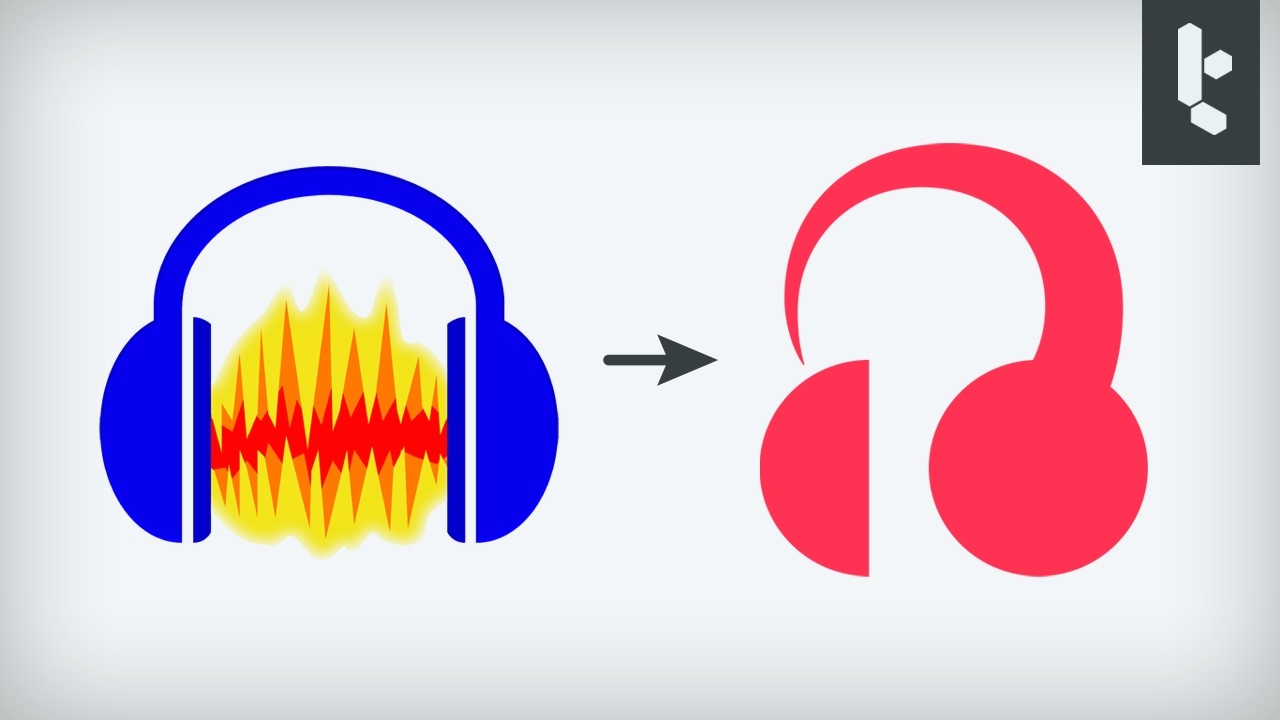
Tantacrul, by the way, is a developer and a user experience expert, who runs many of the projects for Muse Group, including MuseScore Studio and Audacity. His video on the next version of Audacity is also quite interesting, and relevant for many on this forum (if off-topic for this section of the community):
Thanks for sharing. Very interesting, both videos. I’ve used Audacity in the past when I first started to record my guitar playing, and it was just sooo easy to use. But I have since “upgraded” to Ardour as that has more music features.
Got that notification from FB over a year ago in my region. I just objected and put a one-liner in the text box pointing out that I’m covered by GDPR. Job done, took less than a minute overall.
The wording of it is bang out of order, making it seem like they have every right to use your data, that you need a specific reason to object, and that they can judge whether your reason is good enough or not. Even the confirmation was worded in such a way as to make out they were doing me a special favour, rather than just respecting my damn rights.
I detest all social media and the back-handed companies that are involved in it.
I’ve always accepted the old chestnut: “If you’re not paying for the product, then you are the product”
Why would I expect to get a global audio-visual communication platform, complete with telephone book for free? (Facebook). Or unlimited songs/videos from almost any artist I want?(YouTube/Spotify).
What does stick in my throat, is the fact that these companies are not taxed for all the billions they earn from the information they harvest and sell.
I have little attachment to my privacy or personal information (password/security aside) and indeed am happy to have my foot- or fingerprint leave its mark all over social media. It might counteract some of the toxic stuff growing in this petri dish…
Now, this looks like a job for me So everybody, just follow me 'Cause we need a little controversy 'Cause it feels so empty without me
One of the concerns is, unless you have specifically opted out of such things Facebook have the right to use your content for advertising uses. More specifically, they do this with photos.
So you could, for example, have a photo of you sitting with a lovely hat on, holding up a sign at a protest, with that sign saying “I support Fracking in the UK”, being sent to millions of UK citizens, without your explicit permission or knowledge.
Basically, if you upload photos to FB, you are giving them permission to use them as stock photos for any purpose they want (primarily advertising).
With AI, it goes further because they, or any of their partner or, potentially, any users of their AI image generation products, could end up using your likeness (or something derived from it via training) as part of an AI generated image which may be completely different from the original image.
Personally, that bothers me, especially as that is enabling them to generate more of the billions that they then don’t pay tax on.
I think we see things in a quite similar light, Keith
I just don’t think it bothers me as much…
When those pop-ups appear asking for ‘cookie permissions’ I think I’m the only one in our house who scrolls down ticking all the the ‘disagree’ buttons. I think I only do that because they ‘ask’
I presume all my data is collected, whether they have permission or not, and have always taught my kids that whatever you put on the ‘internet’, just assume it is (or will become) available to the public.
Wouldn’t bother me in the slightest. In fact, I think I’d quite like that. Nothing like a bit of negative advertising and I’d be sharing it with all and sundry, showing how devious/dishonest/cheapskate they are Companies usually try to avoid negative publicity (as opposed to some politicians and celebs)
We’re back on the same hymn-sheet
Tax 'em to hell… or Connacht, seeing as they are all based in Ireland…
Facebook, now part of Meta Platforms, has faced scrutiny regarding its tax payments. Despite generating significant profits, the company has often paid little to no federal income taxes.
Recent Tax Trends
In 2023, Meta reported profits exceeding $70 billion but paid an effective tax rate of only 11.5%. This rate is notably lower than the statutory corporate tax rate.
In previous years, Facebook has received tax refunds. For instance, in 2012, it reported $1.1 billion in profits but did not pay any federal income tax, instead receiving a refund of $429 million.
Factors Influencing Tax Payments
Tax Breaks and Loopholes: Facebook has utilized various tax deductions, such as those related to executive stock options, which have significantly reduced its taxable income.
Corporate Tax Law Changes: The 2017 tax reform reduced corporate tax rates and left many loopholes open, allowing large corporations like Facebook to minimize their tax liabilities.
Conclusion
While Facebook does pay some taxes, its effective tax rate is much lower than expected, primarily due to tax breaks and the current corporate tax structure.
I think you answered your own question, really…
I’m afraid my home country has a well-established track record of enabling multinationals to avoid paying taxes.
Here’s just one example Apple told to pay Ireland €13bn in tax by EU - BBC News
My brother was working with Microsoft in Dublin till last month. At a tour of one of their data centres last year someone asked: “What happens if there’s an emergency energy shortage?”
They pointed out they had huge diesel tanks to run generators that would keep the cloud running for three whole days. When asked “What happens then?”, they said they had paid the Irish Govt. a shedload of money to ensure that in a crisis/emergency, Microsoft’s energy needs are supplied before anyone else’s
Apologies in advance for taking this discussion off-topic but the preferential treatment the data centres receive really galls me.
For the past decade, we’ve had a housing crisis in Ireland. It’s a global problem but it has been particularly acute in Ireland. 10 years ago, large numbers of tented communities emerged in Dublin as poorer renters lost their homes, record numbers of families became homeless and housed in hotels as emergency accommodation, and we had the first death of a street-sleeper due to exposure to the elements. Unfortunately, because this has been going on for so long, it has become “normalised” and not considered to be a political priority. The reasons for this housing crisis are multi-faceted (politically and economically) and discussing them would really take this discussion off-topic.
However, one of the reasons why new houses are not being built as fast as they need to be is that there isn’t enough power available to meet the consumer demand. And a large factor behind that is that the data centres already have “first dibs” on the available electricity supply. It’s also making a mockery of our commitments to reduce greenhouse gas emissions. Only in recent years, have local authorities started to refuse planning permission for proposed new data centres.
Meanwhile, our Data Protection Commission prefers “light touch” regulation and implementation of GDPR when it comes to Meta and the other ad-tech multinationals based in Ireland but it forces local authorities to remove CCTV from public parks that have problems with crime and other anti-social behaviour:
Feel free to add me to the map. Will_E_Vander is looking a bit lonely.
Obligatory disclaimer: I’m originally a culchie – though now living in Dublin more than twice as long as I grew up in rural Meath. I’m also married to a Dub who wouldn’t want to leave.
I’ve gone off anti-social media entirely. Not quite sure given the hi tech state of regular television how much they actually listen in at their leisure. There were too many times we had a private, or so we thought anyway, conversation in the sanctity of our own home about something, only to start getting deluged on the TV and computer ads with a related product. Do they listen in to what we’re talking about? It’s entirely possible, not just a crazy conspiracy theory. There were also times when I simply thought about something, and poof, there’s an ad for it. Now that’s spooky stuff! Let’s hope that’s never a reality. We’d all be screwed for thinking what we do.
I want people to be careful and aware of how these companies work. But I don’t want to encourage unnecessary paranoia.
Clearly, it’s not possible to read thoughts. And the fact that you have had “spooky” incidents like this shows that this sort of coincidence (and it cannot be anything but a coincidence) does happen.
Which means it can happen for other things, such as when you have conversations.
That’s not to say it is impossible for smart devices to listen in and use that to drive advertising. But consider that the human brain is programmed to try to detect patterns and to try to make random things make sense. The greatest likelihood is (until proven otherwise) that you are putting too much weight on coincidental events.
The most obvious example of this is Pareidoila, where people think they see faces in rocks, the moon, stains on cloth, or even slices or toast …
Thanks Keith, I didn’t know I had Pareidoila until you mentioned it here. I often see faces in naturally occuring things like trees or clouds, and sometimes in objects like you mentioned. Nothing wrong with that I think. It shows we have an artistic side. That’s my take, and I’m sticking to it. You 100% certain that reading thoughts is impossible??? LOL. Have a great day. I bet you knew I was going to say that.
Everyone has Pareidolia. It’s a natural part of the human brain and how it works, and just once facet of our brain’s tendency to try to make sense of things and to spot patterns, even where there are none.
In the past, seeing a face against a busy background, was a useful survival skill, especially if that background was a forest, and that face was a lion or a bear.